
Meals on Wheels of Southwest Ohio and Northern Kentucky is building a new 51,000-square-foot headquarters and meals production center to meet growing demand, streamline operations and increase its capacity to produce and deliver nearly 3 million meals each year. Designed around efficient production and greater collaboration, the new facility will also strengthen the organization’s long-term sustainability and ability to serve older adults and community partners throughout the region.
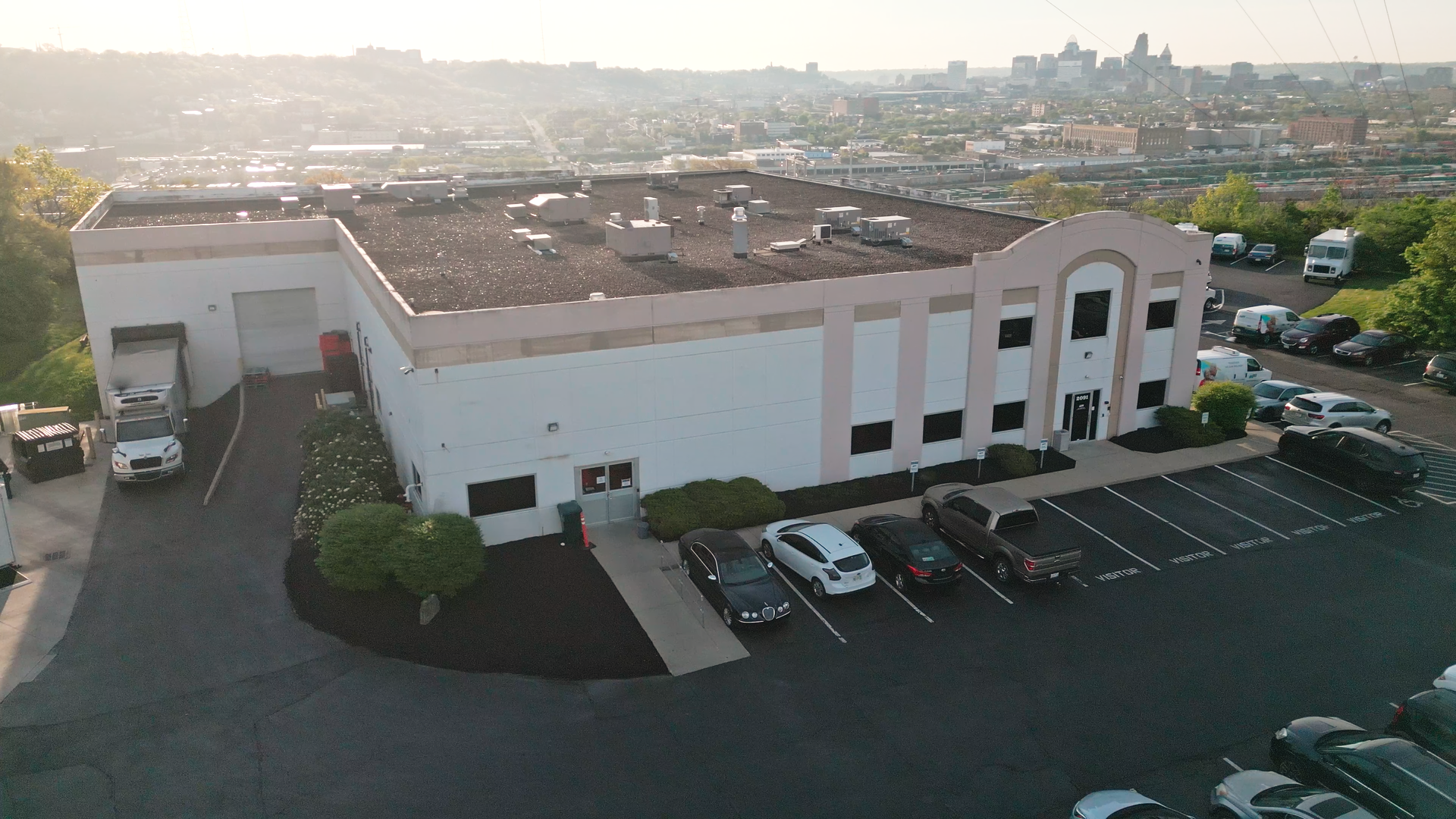
Meals on Wheels' current production facility and main administrative office is located at 2091 Radcliff Dr. in South Fairmount. A second office, where our transportation team, transportation fleet and social and protective services team are headquartered, is located near Clifton.
Mornings at Meals on Wheels are a hustle. Our production facility on Radcliff Drive in South Fairmount starts humming around 6 a.m. as members of the kitchen, distribution and meal-delivery teams ensure more than 4,000 meals head out the door, reaching seniors at home and at congregate locations for group meals. By 10 a.m., the fastest-moving parts of the hustle have settled to prepare for the next day when another 4,000+ meals need to be delivered.
Meals on Wheels produces and delivers nearly 1.2 million meals every year. To make that happen, the production process must move like a well-oiled machine, and it does—but it’s a machine that requires an upgrade, as it were, in order to keep pace with service demand.
“When we moved into our facility on Radcliff, we were producing around 300,000 meals per year. We are beyond our capacity now,” says Meals on Wheels Chief Production Officer Michael Beck.
The building neatly suited the needs of our organization (then Wesley Community Services) back in 2009. Seventeen years, a full re-brand and mergers with two nonprofit organizations later, the scale of our meal production has changed tremendously. Today, space is far more limited and the production team makes the most of every inch of the facility.
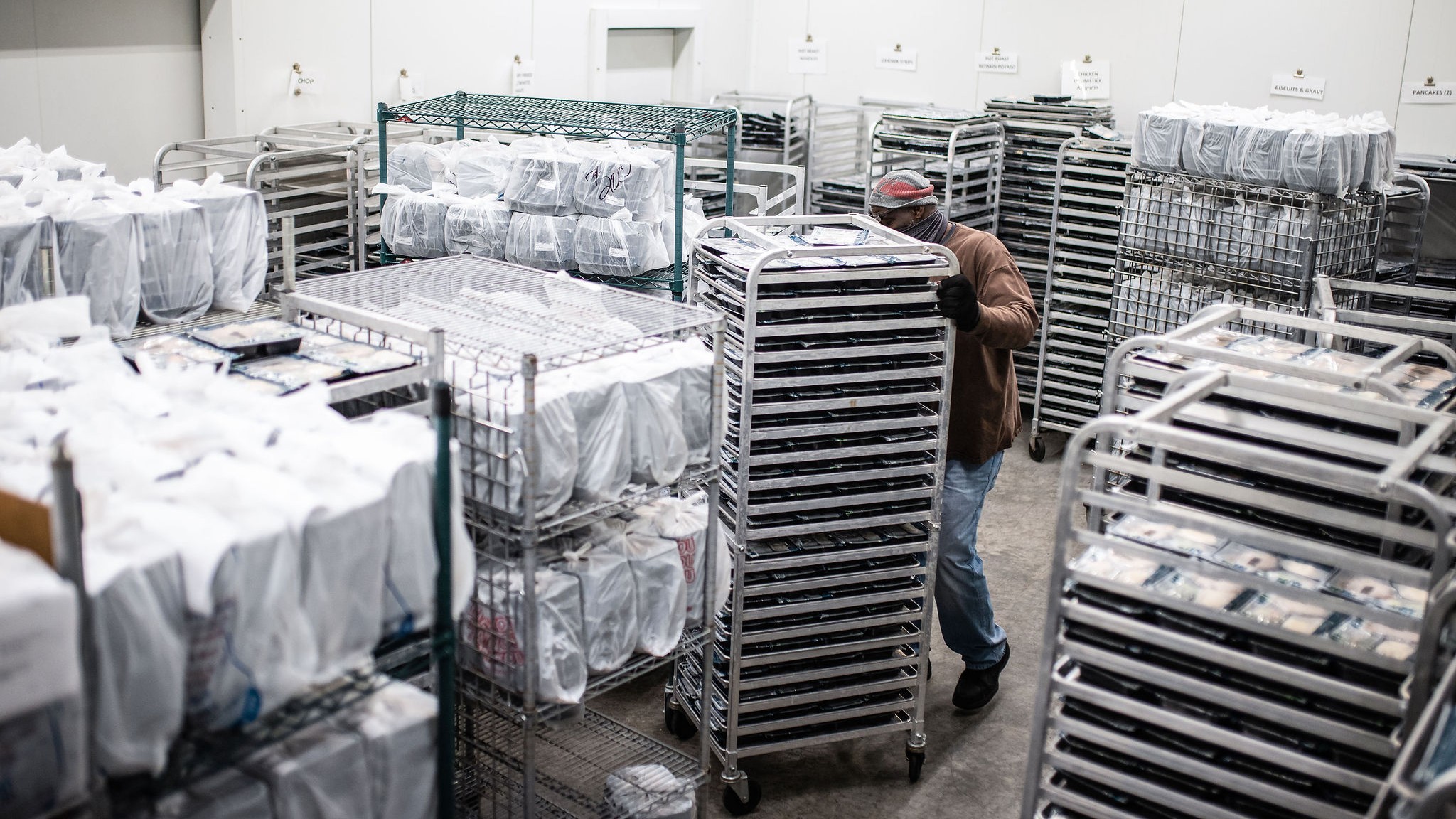
Also working at our building on Radcliff are our customer care, social connections, advancement, volunteer management, administrative and leadership teams. Our social and protective services team, transportation team and our entire passenger transportation fleet operate from a different location near Clifton on Central Parkway. Outside of two satellite distribution sites, around 100 employees are split between two properties.
“The need for us to grow is essential to the services we provide today and in the future. Our region’s aging population is growing, just like the rest of the country, and demand for our services is increasing. A new headquarters and meals production center is absolutely necessary,” Michael says.
Meals on Wheels is partnering with Danis Construction and Champlin Studios to build our new headquarters at 3251 Highland Ave. in Columbia Twp. At 51,000 square feet, the building is double the size of our current property on Radcliff and brings our teams under the same roof for the first time—a true home that strengthens collaboration and efficiency. Our entire fleet, from meal-delivery vans to transportation vehicles alike, will live in a single parking lot with plenty of room remaining for our growing team and volunteer community. It is the centerpiece of the Driving Into The Future Campaign.
Production-Centered Design
Currently, Meals on Wheels’ production facility has, what Michael describes, an “S-shaped pattern.” The path the product takes is non-linear, resulting in production team members making multiple sharp turns and moving to and from multiple rooms. A non-linear path combined with storage space reaching its capacity puts additional pressure on that proverbial well-oiled machine.
Assistant Distribution Manager DaMarco Brown describes, “Maneuvering through the building gets really tough because we have stuff that needs to be stored in places and we’ve got to wait until certain rooms are empty or certain areas are done working If we overdo it, we don’t have space, but we don’t want to underdo it either.”
Combine that with an increasing need for our services and it is easy to see why a new space is mission-critical: We cannot increase production because of capacity and we cannot decrease services because of demand.
“We get it done no matter what because seniors are depending on us,” Michael says, “but not without a few bumps and bruises along the way.”
Leo Barth, Project Manager at Danis Construction, says the property is designed strategically for Meals on Wheels with the production process as its primary focus. “The site is very large and has roughly 250 parking spots which can handle the high capacity of employees and volunteers as well. The back portion of the building is very linear. This makes the production process flow through the building efficiently similar to a production line.”
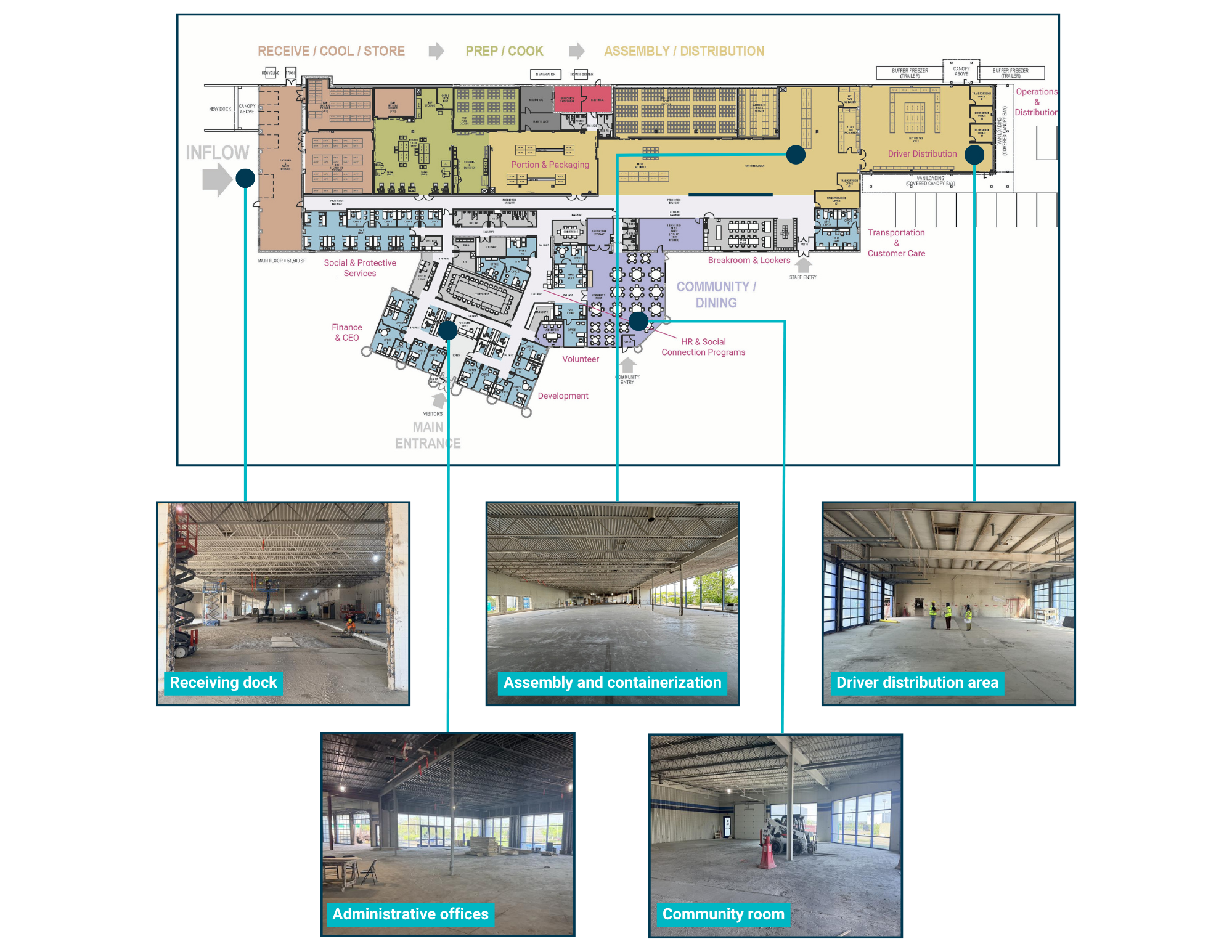
Aerial view of the layout of Meals on Wheels' new headquarters and meals production center. Construction photos taken May 2026.
Sustaining the Organization
More meals in a more efficient space is but one of the benefits of the new meals production center. Says Leo, “Another key feature which allows Meals on Wheels to increase production output is the ability to accept and store more products. This new facility will have 4,000 square feet of freezer space and 1,500 square feet of cooler space, custom built to fit within the production line. It will also have two full-size loading docks, whereas the current facility only has one small loading dock.”
For Michael and his team, that additional space alleviates pressure while also opening up new opportunities. For example, one of the more timely challenges our organization has faced is one we have all felt in recent months: rising food costs. Buying in bulk is a fiscally responsible, budget-friendly solution but it is presently just out of reach.
“Purchasing food in bulk is always less expensive but we cannot do that to the level we would like in our current facility. More freezer and storage space will allow us to relieve some of the strain of inflation and allow us to be more sustainable as an institution,” Michael explains.
Additional to this cost-savings strategy, the new meals production center enables Meals on Wheels to serve local nonprofit partners who feed their communities. More storage, more bulk-buying power and more streamlined production processes give us the opportunity to provide meals to organizations within the region at affordable rates.
Michael sees it as a win-win: Purchasing meals in this capacity is beneficial to our partners, and it also draws back our dependence on government funding sources.
“We can’t ignore the uncertainties of our time. All told, about 79 percent of our funding comes from government sources. It is imperative that we diversify in order to be sustainable,” he says.
Retrofitting vs. Rebuilding
Regional natives might recognize our new location as the former John Nolan Ford Dealership. If not, the catchy commercial may ring a bell: “A good deal better / at John Nolan Ford! ... Ridge and Highland, just off I-71.”
The connection is unintentionally poetic. Meals on Wheels is breathing new life into a well-known automotive sales and service center in order to deliver services, literally, for our older neighbors.
Despite minor structural and architectural improvements, Leo says, most of the exterior remains the same. “That gave Meals on Wheels the opportunity to avoid cost for full building demolition and new foundation, structural steel, site work and much more. Knowing the shell of the building was going to remain mostly the same, the primary focus during design was making the space fit for Meals on Wheels.”
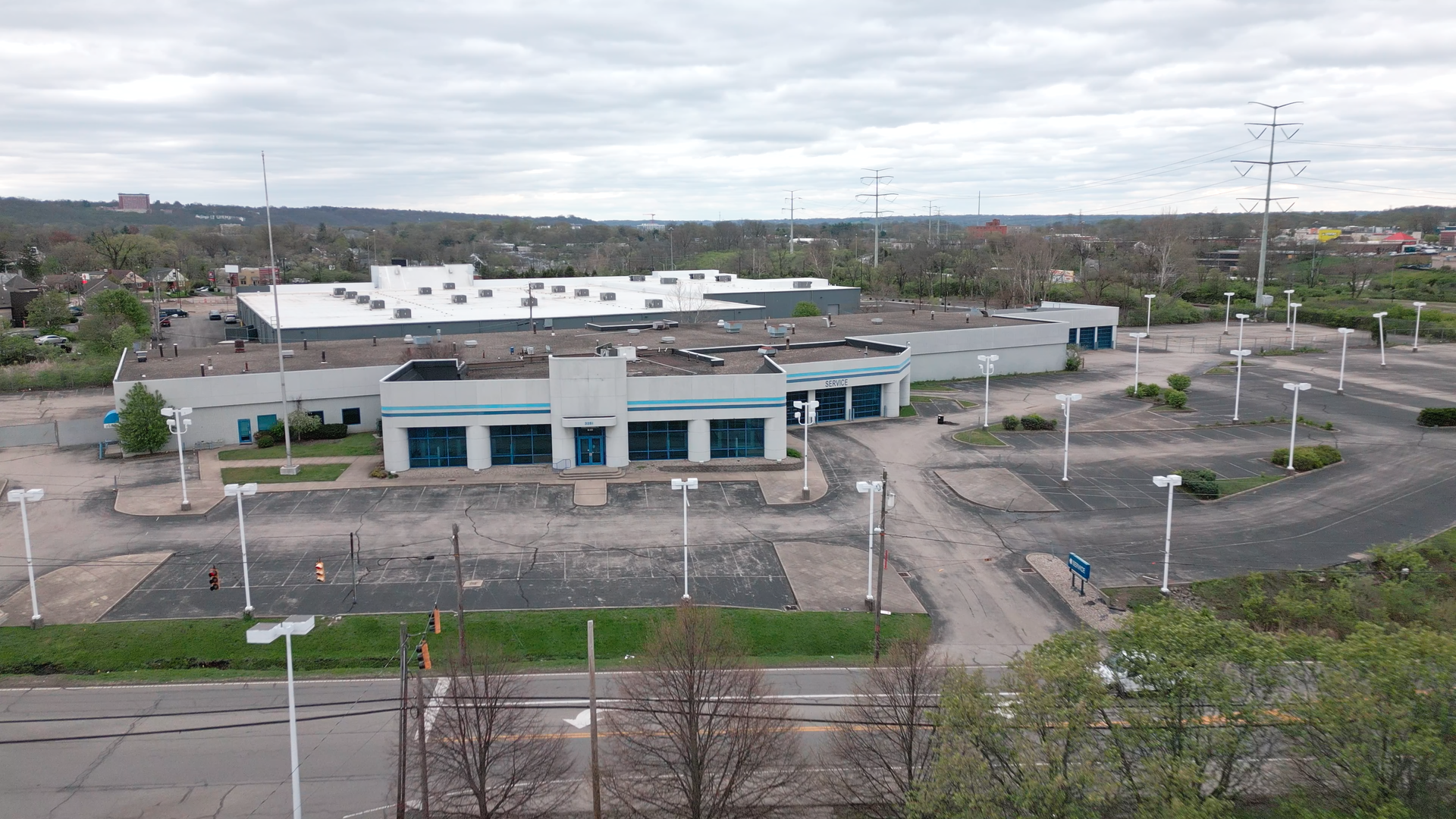
Our new headquarters and meals production center is located at 3251 Highland Ave., in Columbia Twp. It will bring our teams together under one roof for the first time in our organization's history and will equip us with the tools necessary for expanding our reach and improving the lives of our community's older adults, families and caregivers.
Construction of Meals on Wheels’ new headquarters and meals production center is expected to be completed in around the start of 2027. Learn more about the Driving Into The Future Campaign, of which the new building is a centerpiece, here.